ELECTROCAUTERY 2.0: Wounds & Post Treatment

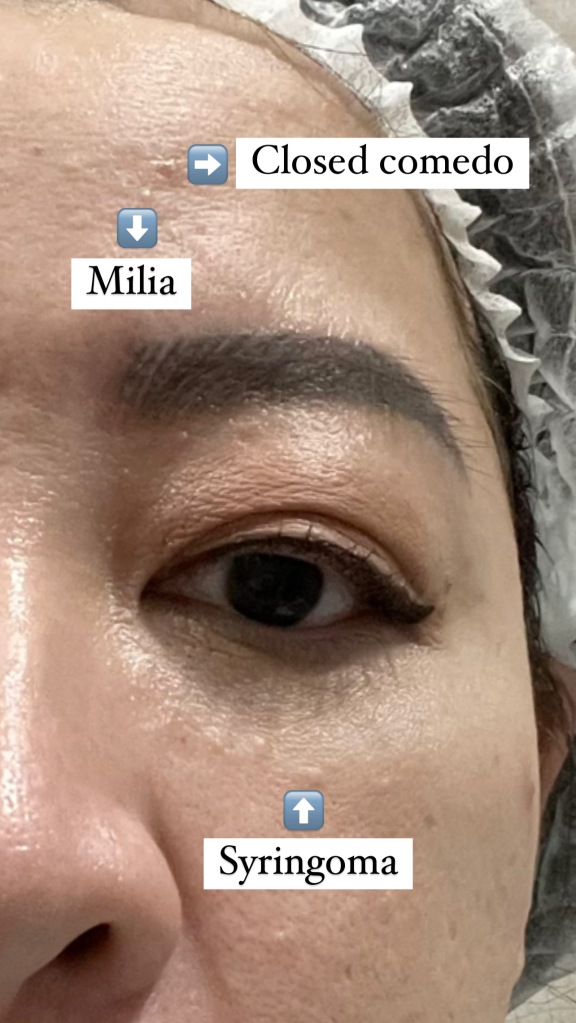
As you probably know already, milia and syringoma are genetic. Both are harmless, yet aesthetically disturbing. Before 2022 ends, I did another ElectroCautery procedure (or shorten as Cauter) to get rid of them.
Did my first ElectroCautery back in 2018, you can check the post here.

Don’t panic if you google Syringoma and turns out they are actually tumors. They are mild and non-cancer ones. Similar to milia bumps, but they are not formed by oil glands. Instead, Syringoma are the result of over-productive sweat glands. Unfortunately, both can only be removed by professional procedures, and I choose ElectroCautery aka Cauter because I’ve done it before. 
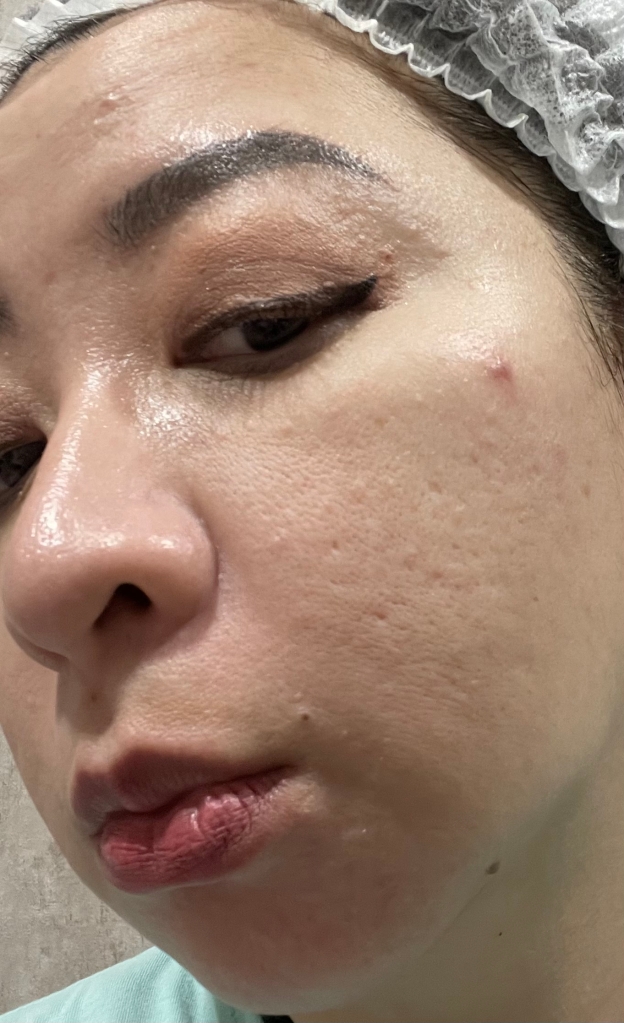
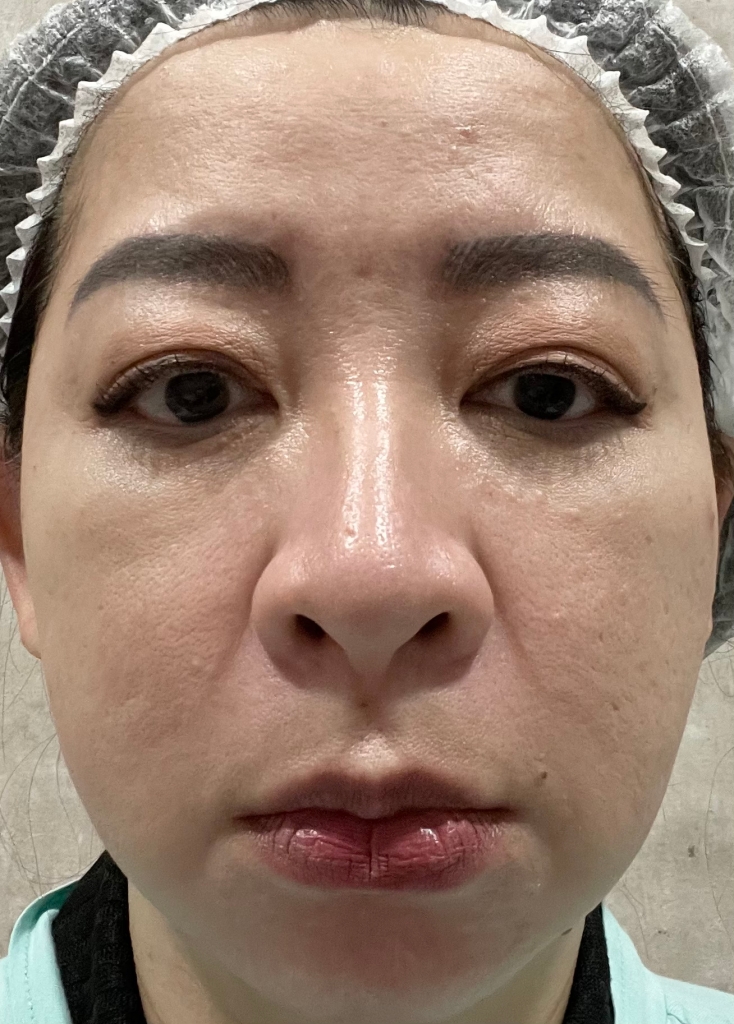
BEFORE CAUTER (mind the angry zit)
BEFORE CAUTER: Milia and Syringoma usually appeared around the eyes area

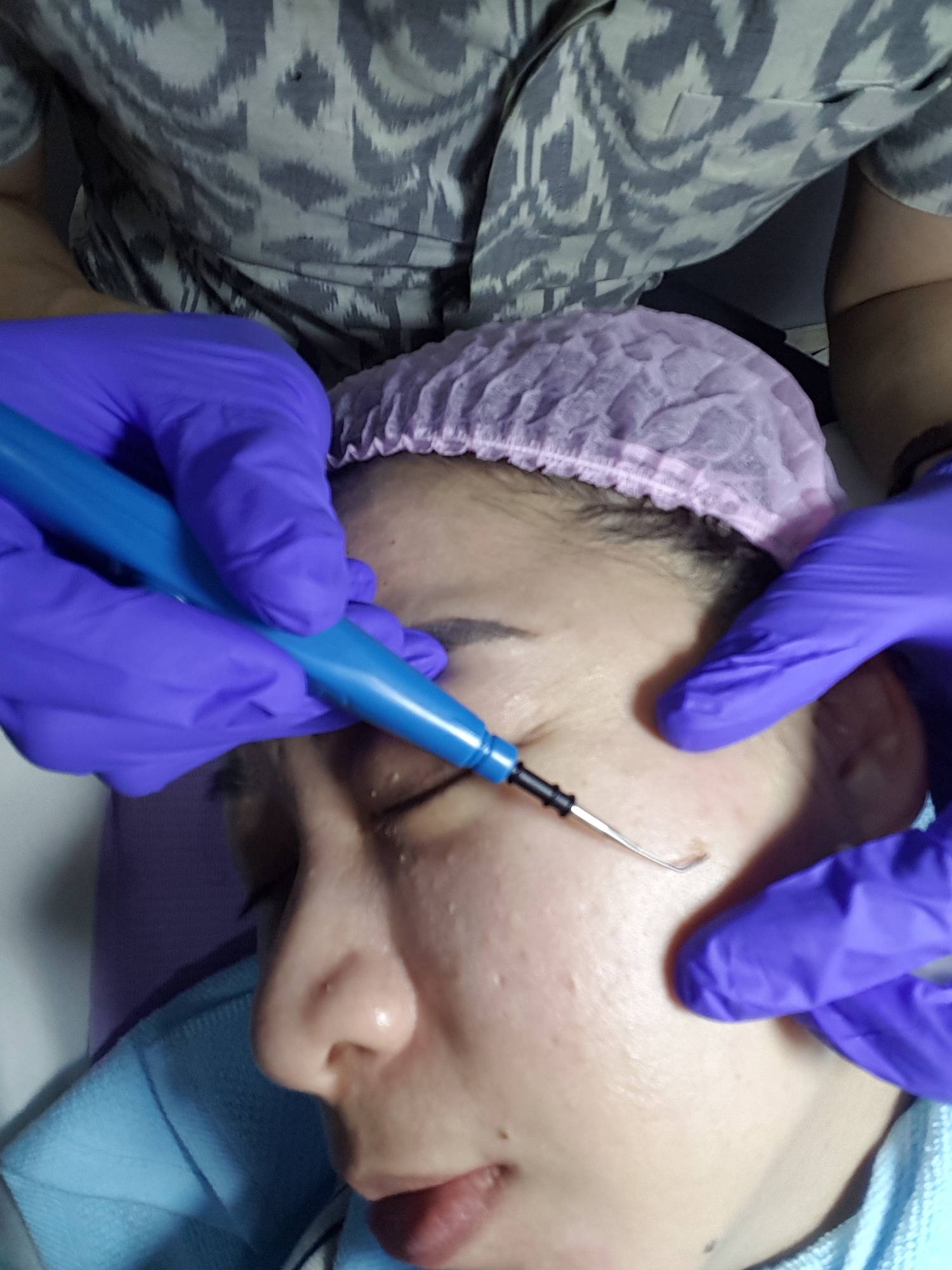
Since both are genetic, they might reappear after a few years, and in my case, they did after four years. I did my treatment at Beauty By Appointment again with the same steps applied. Clean the face, numb cream for 30 minutes and on with the Cauter. It wasn’t painful during the procedure, but after, your skin might felt sore (depending on your pain endurance level). 

Do’s and Dont’s:

  • Do not wash your face 6 hours after the treatment. 
  • Apply antibiotic cream on the wounds, twice a day on clean and dry skin. Do this consecutively for 5 days.
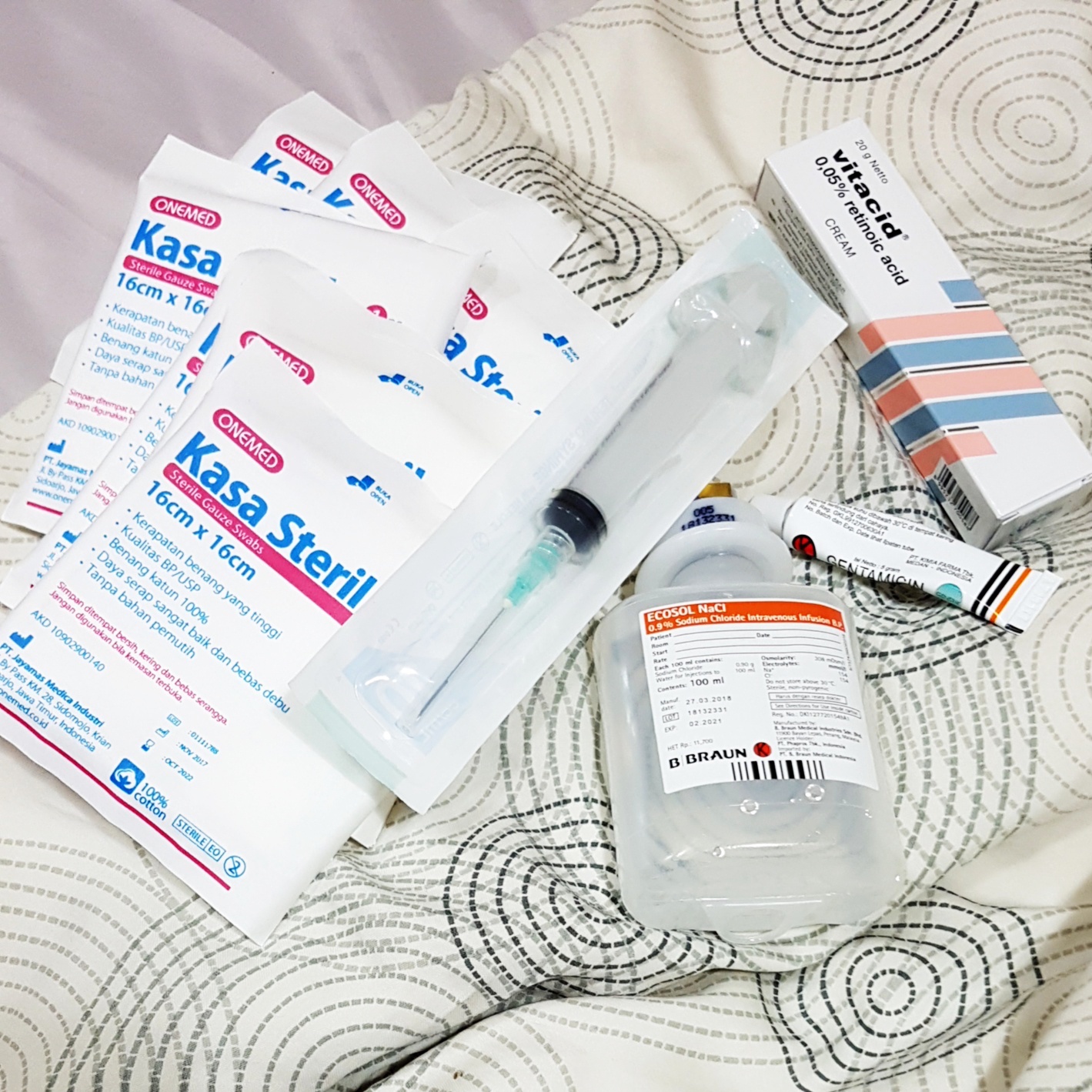
  • Alternatively, you might compressed your skin before applying the antibiotic cream, with NaCl solution (great for treating burnt wounds). 
  • Use gentle facial cleanser with no active ingredients
  • Do not apply any actives while your skin is healing, wait until the wounds are completely and naturally flaking off.
  • Avoid any type of base makeup when the wounds are still wet. 

How long did it take to heal? It might vary, depending on your skin ability. It took my skin 30 days to heal back in 2018 after the first procedure, see the photos here.
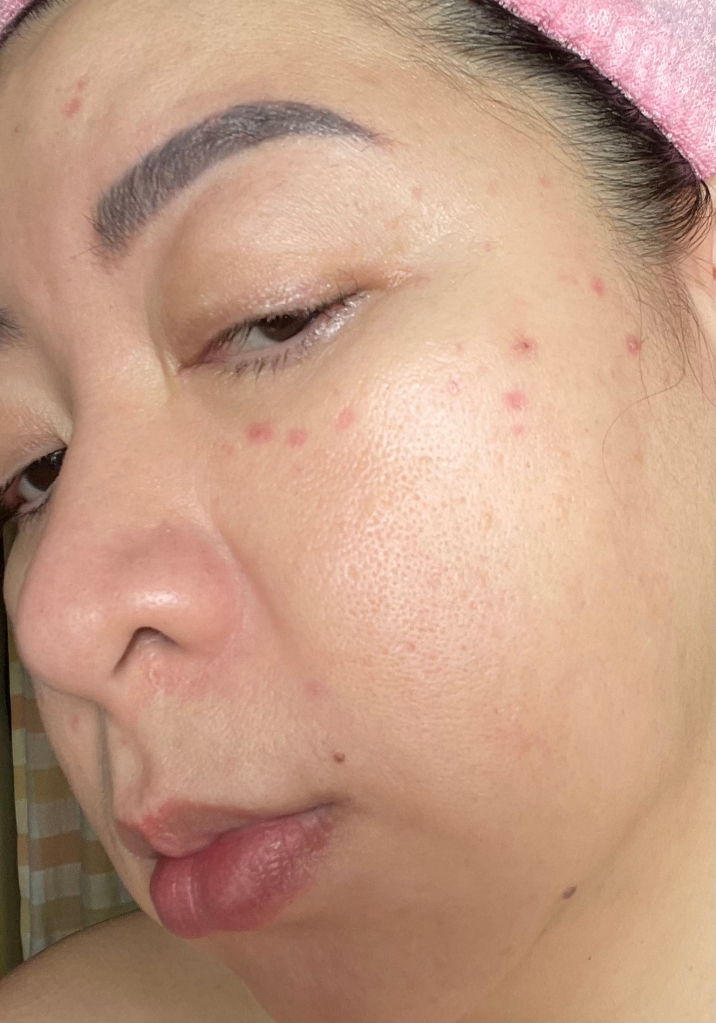
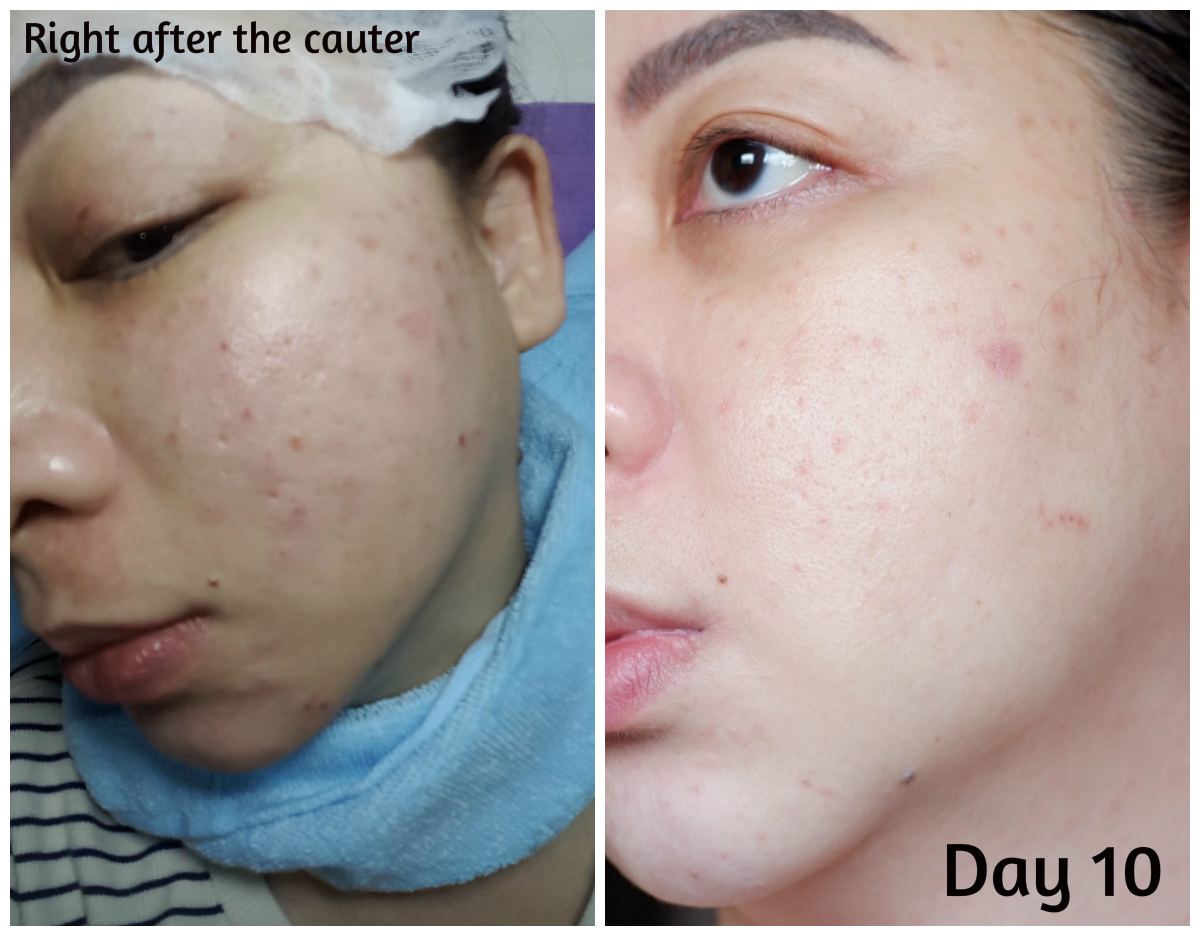
6 DAYS AFTER CAUTER: around the lids were healed more quickly
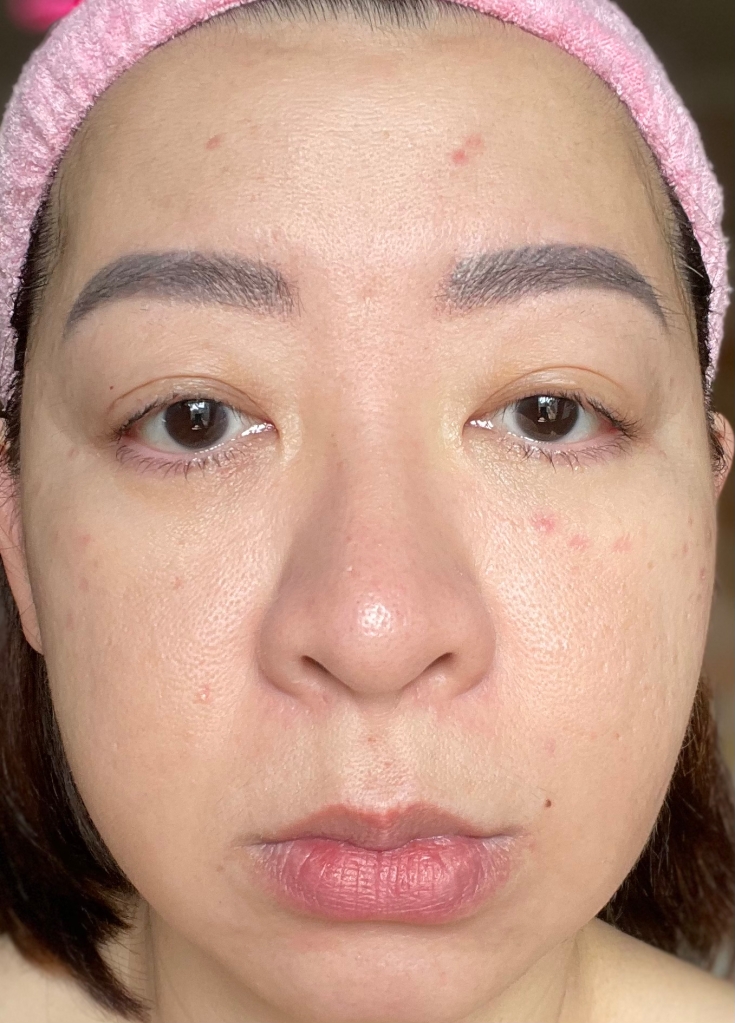
6 DAYS AFTER CAUTER: no scabs, just the red marks all around

Unlike most people that did Cauter, who had black scabs that peeled off naturally when they dried, my wounds didn’t. Instead they turns red like acne marks without no scabs. No worries, I will do my skin update when my skin heals completely, so stay tuned. Meanwhile, here are the products that I used during skin healing after Cauter. 
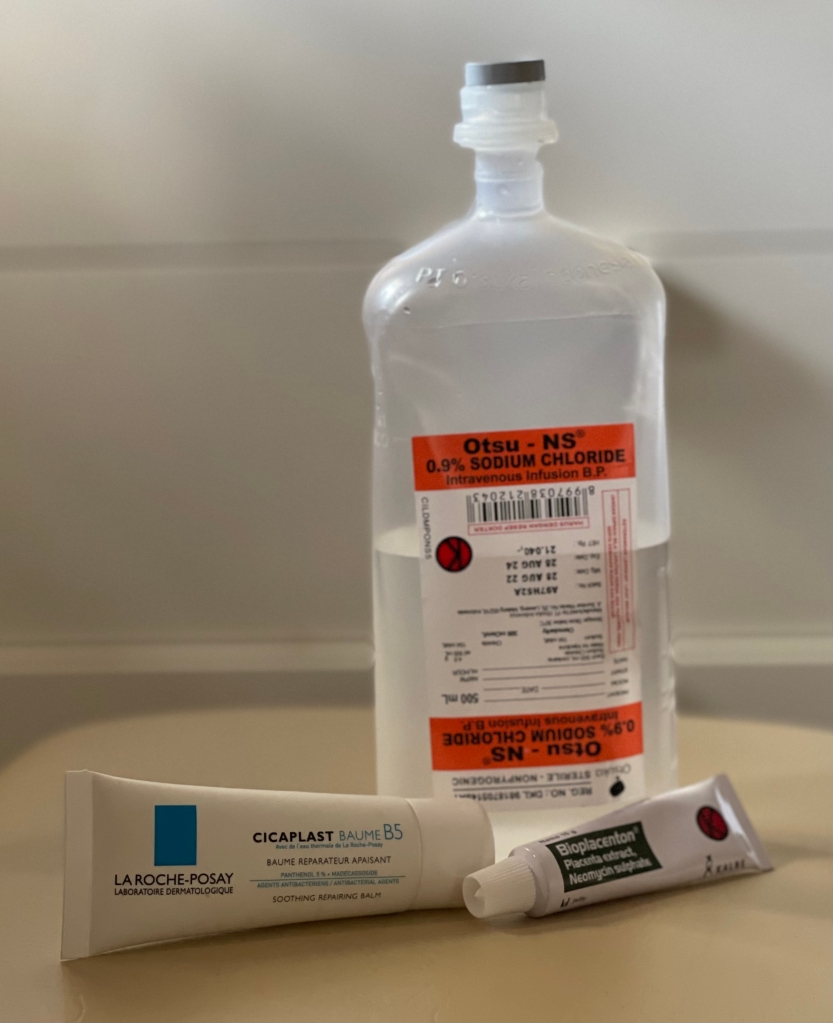
  • La Roche-Posay Cicaplast Baume B5
  • 0.9% Sodium Chloride as my CSM to compress
  • Bioplacenton Gel

PHOTOS: SHINTA ROSVITA
MILIA, XANTHELASMA, SEBACEOUS HYPERPLASIA: WTF?

After the whole fungal acne saga, enter another 99 skin problems. Well…three to be exact.

I blame it all to my hormones. And yes, to stress, fatigue and poor diet, too.

collage1.jpg

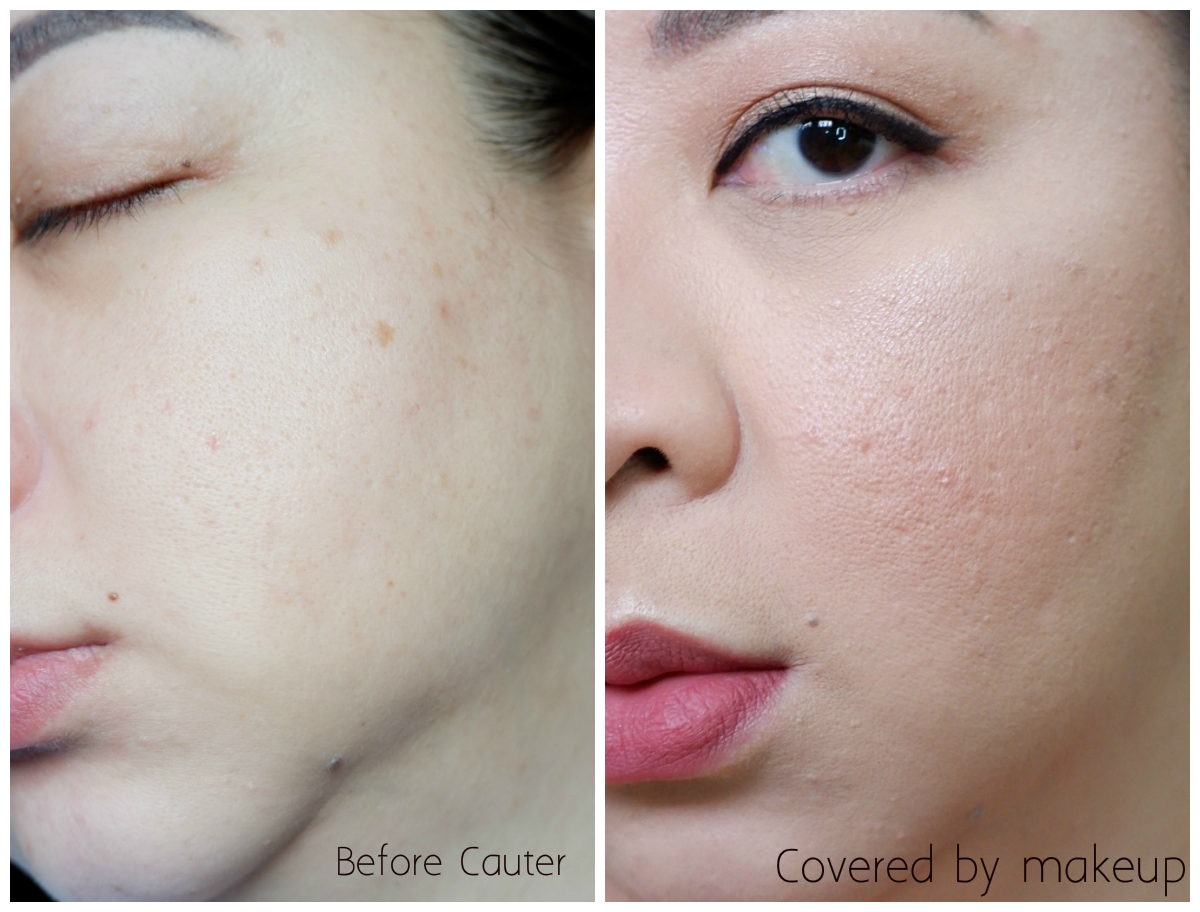
Check out my bare and made-up skin (covered by powerful primer, concealer and foundation). Yes, I can cover that much. But by the end of the day, the spots are there. Weird looking spots (some look like pimples and closed comedones). Weird looking brown spots that actually rise on the surface of the skin like nano-sized cyst.

What the heck are them? Are they harmful?

On my eyelids are milias, small, dome-shaped bumps that are white but not ichy or painful. These formed directly from entrapped keratin, usually genetic. And also on the outer corner of my eyelid, some Xanthelasma occurred. They are soft, a bit yellowish, fatty deposit. Basically, it’s related to fat consumption (thanks butter and lattes!).

On my upper cheeks, there’s Sebaceous Hyperplasia. These occurred when the sebaceous glands that are attached to hair follicles all over our body, including face, become enlarge and trapped with sebum. Unlike Xanthelasma, these bumps are flesh-colored. People with fair skin (check!), and who’ve had a lot of sun exposure (also check!) are more likely to get this. Oh yeah, this is also genetic (darn it!).

At one point, even though they are mostly harmless, I feel cosmetically unattractive. What to do when one felt like one? Enter cosmetic procedure: ElectroCautery. I did mine at a local clinic (check their IG @beautybyappointment).

20180928_135601 copy.jpg

From what I read, electrocautery is also known as thermal cautery, a surgical procedure often used to remove growths on our skin. Basically this heated needle will burn those b**ches. Certainly smelled the burnt skin while doing this procedure. Did it hurt, you might ask. Not during the procedure (thanks to the numbing cream pre-procedure), but afterwards, it felt like a burnt wound on my face (especially when I washed my face for the first 3 days).

collage3.jpg

As you can see, some of my wounds are pretty big, especially on upper cheeks area (when most of them are sebaceous hyperplasia). While on the eyelids, milia wounds were quicker to dry and much smaller in size.

C360_2018-10-13-08-01-19-734 copy.jpg

After the procedure, the clinic gave me: NaCl aka Sodium Chloride for compress mask, anti-irritation cream and retinoic acid (which I ditched sooner because it seemed to redden my wound. They told me to always use sunblock whenever I go out and only put loose powder as my makeup (no foundation, no nothing). Will keep you guys updated on my journey with the wounds. Currently, doing my best to remove those scars with natural remedy: Rosehip Oil and chemical: Dermatix Ultra. Wish me luck!!

Meanwhile, if you asked me is it worth it to do this procedure? YES, if you are forever annoyed by bumpy textures. NO, if you can’t deal with the reality that you’re going to be wounded for a couple of weeks (and nothing you can’t do to cover them, say bye to concealer and foundation). Remember, life is full of choices and cosmetic procedures are too.

PHOTOS: SHINTA ROSVITA